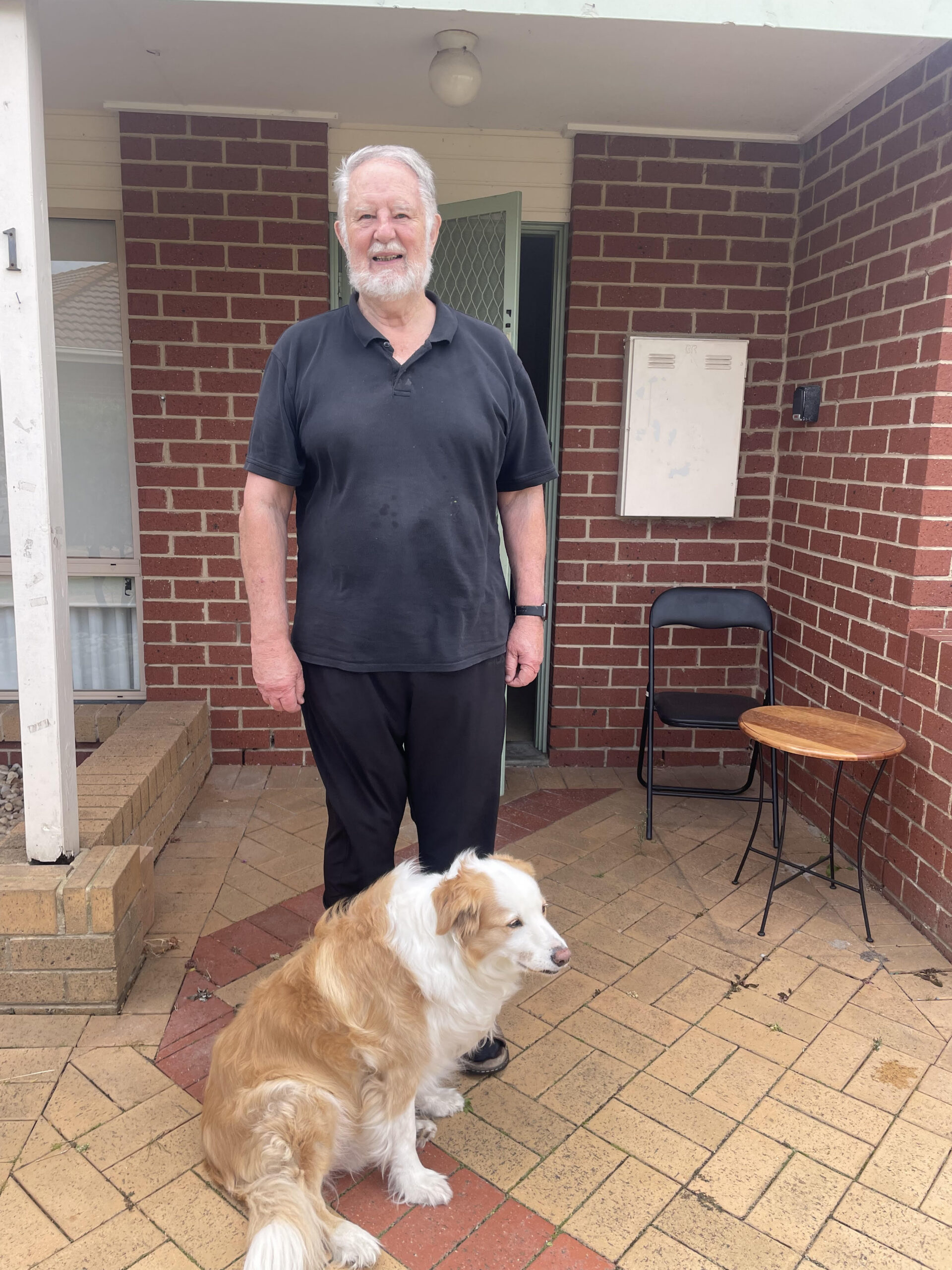
Written by veteran, Gordon Mallet
I was born in Kyogle on 21 April 1949 — a date that would come to shape my life in ways I couldn’t have imagined at the time.
We lived in a small place called The Risk. It had a post office, a hall, and a school where my father was the headmaster. Because of his role, we moved around a fair bit. I grew up learning how to make friends quickly — and just as quickly, say goodbye to them.
Dad’s final appointment brought us to Glenorie in Sydney’s Hills District. That’s where I finished high school before heading off to Macquarie University. It was the late ’60s and early ’70s — interesting times, to say the least. The Vietnam War was in full swing, and opinions across the country were deeply divided. Conscription had been introduced in 1964, and young men were selected by a ballot based on their birth date.
Which brings me back to mine.
In my 20th year, the marble dropped — 21 April. Just like that, everything changed.
One moment I was a university student, enjoying all that came with it — study, the pub, part-time work, and a bit of club motorsport in an old Peugeot. I loved live music, and I wore my hair long, with a beard that could rival ZZ Top.
Before induction, I went to a barber and told him I needed an “army haircut” and that I wanted to lose the beard. He said, “No problem — I was in the army myself.” I walked out nearly bald… or so I thought. On induction day, a warrant officer tugged what remained of my sideburns and said, “Don’t worry lad, we’ll soon have that off ya!”
That was just the beginning.
The shift from university life to military life was bewildering. Basic training in Singleton was followed by corps training in Bandiana, where the focus was on heavy vehicle driving and logistics. My permanent posting was at Moorebank, 2 Base Ordnance Depot, where I completed my service.
Eventually, discharge day arrived at South Head in Sydney. I remember standing in line and realising that, despite being conscripted, I was one of the lucky ones. Some never made it back — they had paid the ultimate sacrifice.
With my discharge papers in hand, I headed down the hill toward the Watsons Bay Hotel. On the way, I stopped at the wharf and threw my army razor into the harbour. That was over 50 years ago — and I haven’t shaved my beard off since.
I celebrated with a T-bone steak, chips, veg, brown onion gravy, and what felt like a hundred beers.
The next morning, waking through the haze, it hit me: I wasn’t in the army anymore. So… what now?
If being conscripted was bewildering, coming out the other side was just as disorienting — if not more. I chose to return to my studies, taking advantage of the support offered to ex-National Servicemen. But it wasn’t the same. Life had moved on. Friends were gone, social circles had shifted, and I had changed more than I realised.
After finishing my studies, I went into teaching and later moved through a range of roles across different industries, mostly with success. Along the way, I moved house more times than I care to count. I married, divorced, and found that relationships didn’t always follow the same trajectory as my career.
In many ways, I became a bit of a gypsy — professionally, personally, and geographically.
I retired in 2016, though I still picked up part-time work here and there. I was living in Tasmania, a place I truly loved. Despite a few poor financial decisions, I was managing.
Then, in 2019, my partner of 20 years was diagnosed with Alzheimer’s-related dementia. I became her carer, a role that grew increasingly difficult over time.
In 2022, we made the decision to move to Melbourne so she could be closer to her family. Within a year, her condition had deteriorated to the point where she needed full-time care.
With that transition — and the move from Tasmania — my financial situation began to unravel.
I’d heard about the work of Veteran Housing Australia and submitted an application for housing. The priority list seemed long, and in the meantime, I found myself living in a cabin at a caravan park in the Upper Goulburn Valley. It was a long way from my partner, whom I still needed to visit and support, and equally far from the specialised medical care I required.
Another one of life’s difficult — and somewhat bewildering — turns.
Then came the phone call.
VHA had a unit available, and my application had reached the top of the list. I was offered a home at their Noble Park complex.
What a moment. Proof that good things do happen.
What had once been a major disruption in my 20s — National Service — had, in my late 70s, become an unexpected enabler.
I can’t thank Veteran Housing Australia enough. The team is compassionate, committed, and genuinely supportive. Today, I have a secure, comfortable, and safe place to call home. I’m within easy reach of my partner to support her, and I have access to the medical care I need.
If you’ve served and find yourself needing support, I’d encourage you to reach out. Organisations like Veteran Housing Australia are there to help.
Because sometimes, despite everything, good things really do happen.