 When I was a kid, Remembrance Day carried a kind of mystique. I remember buying poppies at school and looking up at the photos on Grandma’s wall—my Great-Great Uncles Joe and Ern, and my Grandpa in Burma. It felt like everyone in my family had served. That legacy loomed large.
As time marched on, I found myself looking back on my own service with quiet pride. I did “my bit”—though nothing like what Joe and Ern endured. They never came back. Brothers and both Veterans of Gallipoli they were killed three days apart at Passchendaele while serving in different units. Joe doesn’t even have a grave. I often think of my Great-Great Grandma Harriet, likely receiving not one, but two telegrams at once.
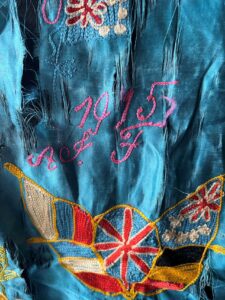
I’ve always felt a special affinity for Ern. He was an Infantry NCO, like me. I carry a silk handkerchief he sent from Egypt, embroidered: “From Ern to mother, with best Love.” It’s worn thin now, passed from Harriet to Mabel to Audrey to Judith, and now to me. I remember sitting in East Timor 25 years ago, facing the possibility I might not come back. All I could think about that was that, “Mum would be really sad.” Sentimental, maybe—but when I hold that handkerchief, I feel Ern over my shoulder, reminding me that I came back for my mum. The mystique that once drew me to sign on the dotted line is gone. What remains is memory and meaning. On Anzac Day, I think of Joe, Ern, and the mates I served with who are no longer here.
On Remembrance Day, I think of the untold millions of mothers who received those telegrams.
Please consider giving a single minute of your day at 11.00am on the 11th of November to remember sacrifices we cannot comprehend.
Written by VHA CEO Robert Miller
“The living owe it to those who no longer can speak to tell their story for them.” — Czesław Miłosz