
What inspired you to join the board and support veterans in this way?
I have always been fascinated by war history and have long appreciated the considerable commitment and risk that members of our defence force make to the people of Australia.
I always wanted to give something back to these brave men and women but didn’t have an avenue to do so.
When Tony Kofkin suggested that I join the Board of Veteran Housing Australia and I learned that I could use my career knowledge (as a property lawyer) to help veterans, I jumped at the chance.
Can you share a moment or story that reinforced why this work is so important?
Over my life I have heard many stories of armed services members coming back from war traumatised and experiencing difficulty re-engaging with society.
Having been born Jewish, I have an all-around empathy for both soldiers and victims of war. I had two great uncles who served in the ADF, one who died in service and another who served in Darwin in WW2. He always had trouble settling down and never ended up marrying.
Every month, in Board meetings, we are provided with a bio of how Veteran Housing Australia has helped a veteran, reinforcing our good work and ability to make a difference in these people’s lives.
How do you see the organisation making a tangible difference in veterans’ lives?
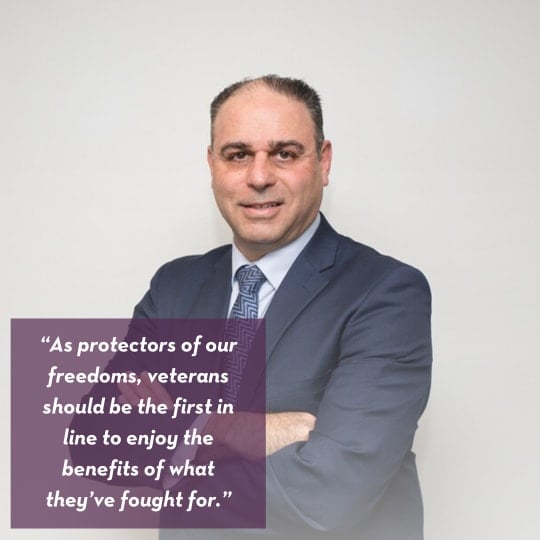
Many veterans can’t adapt when they try to re-enter everyday life after tours of duty. They become estranged from family and support networks, Veteran Housing Australia is one of the few groups to provide the shelter and direct veterans to support services to deal with their trauma and do their best to reintegrate into the society. I am proud to be a part of an organisation that provides nearly 40,000 subsidised nights of accommodation to our veterans. As protectors of our freedoms, veterans should be the first in line to enjoy the benefits of what they have fought for.
What’s a challenge in veteran support that more people should be aware of?
Most of these people have joined the armed forces at an early age and missed the learning that young people receive by getting a civilian job and mixing generally in society.
Instead they learn about killing and survival. Whilst these are important skills in a war environment, they have little or no place back home and they need to firstly recover from any illness they suffer and then catch up on the economic and social learnings that those at home have already received.
In your opinion, what’s the most meaningful way someone can contribute to veteran welfare?
When a veteran returns, if they cannot find a place back within their family, they need help with all their physical needs, food and shelter as well as psychological needs like safety belonging and self esteem.
There are so many challenges because people return with different experiences and suffer both physical and mental injuries. The challenge is to identify and address these injuries and provide the equipment and support so they can live their best lives.
Something as simple as asking a veteran, “Are you OK?” or a small act of kindness can have much more impact than most can imagine, especially if the person is feeling alone or vulnerable.
