Well over 100 years ago the fateful events of the Great War came to pass, and brought that turn of phrase to Australia.
Today it’s rare to find someone in our community with a family connection to that long-ago time, despite 60,000 members of the Australian Imperial Force never coming home out of the 300,000 who enlisted. As a young man growing up in this country, I don’t think I recall a relative’s house which didn’t have framed pictures of men in uniform, some of them amongst those who did not come back.
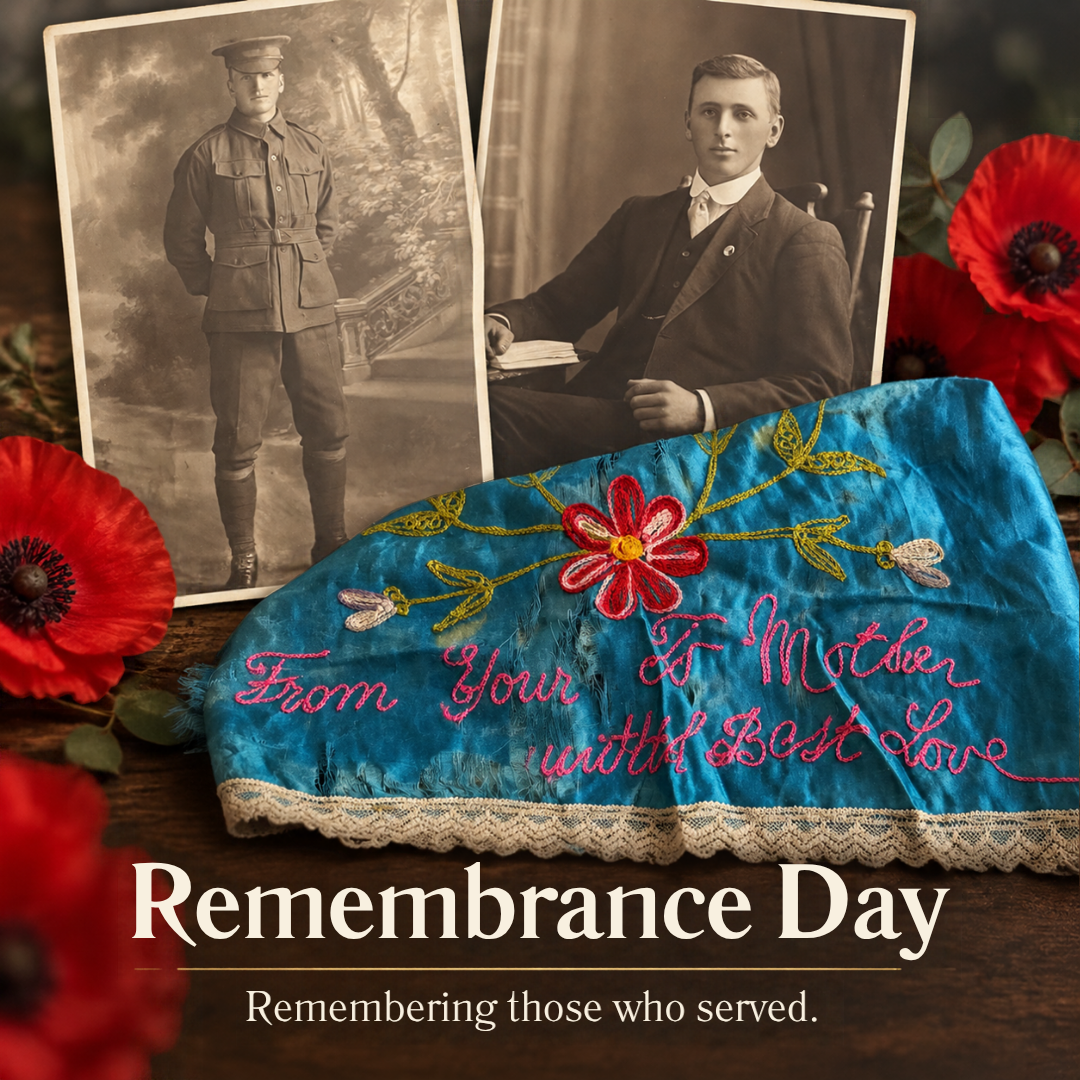
Uncle Joe and Ern were among those (my Great Grandmother Mabels brothers), and the memory of their pictures hanging in my grandma’s front room linger in my mind like yesterday. Probably one of the reasons I Joined the army. As a young man those pictures set the standard of duty.
As the fictional character Roy Batty (Rutger Hauer, Bladerunner 1984) wisely said in the now classic movie line “.. all those moments, will be lost, in time, like …… tears …. in … rain”. So instead of just simply reciting Lest We Forget I will tell you the story of Joeseph “Joe” and Ernest “Ern” East.
They grew up around Elaine in Victoria (south of Ballarat towards Geelong), on the farm of Richard and Harriet East. Both farmers and the sons of farmers.
Ern the younger at 21 enlisted just before the Gallipoli landings and would ultimately arrive at Gallipoli with the 24th Battalion. Having survived Gallipoli with only one trip to hospital he remained with the 24th as they went into action on the Western Front in 1916. He was wounded twice in 1916 and continued in service with the 24th until he was killed in October 1917 about 6 days into the Broodseinde offensive, 10 days after being promotion to Lance Corporal. He remains buried in France. I have the silk Scarf he sent home from Egypt to his mother, my great-great-grandmother Harriet. It is embroidered “From Ern, To Mother, with Best Love”.
Joe enlisted in September 1915, around about the time Ern was deployed to Gallipoli, and would end up with the 12th Machine Gun Company. Arriving in France in early 1916, He was wounded by shrapnel on two separate occasions that year in both his left and right arm. Joe appears to have been a natural leader. My grandmother once said to me (when looking at the picture on the wall) that was a lay preacher at his church. He would be appointed Lance Corporal shortly after arriving in France in early 1916, and in January 1917 went to Corporal and Sergeant quickly. Joe was clearly a fearless warrior also. Being Mentioned In dispatches for his actions. His citation reads:
“At YPRES during operations from 25th– 28th September 1917 for gallantry and devotion to duty. He handled his gun on the 26th September with wonderful coolness whilst subject to heavy enemy artillery fire. On several occasions his gun was buried but he quickly got it into action again. He set a fine example to his gun team”
Sometime in October 1917 (in the field) he was promoted to 2nd Lieutenant and was marked as missing in action 3 days later, killed only a few days after his brother. Ern has no known grave. As an Officer who was listed as Missing In Action there was an official enquiry, the earliest interview with Lieutenant Errol Phineas Congreve Upton states that during a withdrawal, he had spoken to Joe advising him to withdraw to a pillbox about 50 yards back with him. As Upton left the position to withdraw a shell hit the trench where Joe was, killing around 20 officers and men. Upton went back after dark to check on them and confirmed he believed Joe to have been among the fatalities. Other later statements refer to similar circumstances of a shell strike, and suggest the soldiers were buried in the trench later by the 4th Division.
While their sacrifice is particularly close to my heart, these stories would have been very common amongst the 300,000 who enlisted for the great war and their families once upon a time.
As time passes, it becomes even more important to remember.
In memory of fallen and departed comrades and family.
Lest We Forget
Reflections from VHA CEO Robert Miller